
HVAC Inspection
Footprints Property Inspections tells Northeast Ohio buyers and homeowners what condition the heating and cooling system is actually in, and where it sits in its service life, so you can budget for the replacement instead of being surprised by it.

The owner holds the InterNACHI Certified Master Inspector designation, the highest credential in home inspection, earned after a minimum of 1,000 verified inspections. Footprints is ASHI Certified as well, and sells no HVAC repairs or equipment of any kind, so nothing about the evaluation depends on what we find.
Typical furnace service life. Air conditioners run closer to 10 to 15.
Replacing both can run $5,000 to $12,500, which is why the age of the system belongs in your numbers before closing.
The system runs. That doesn't tell you much.
Almost every furnace we look at turns on. A system that fires up on a mild October afternoon can still be a system with a cracked heat exchanger, a failing inducer motor, or two winters of life left in it. "It worked when I tried it" is the least useful thing anyone can tell you about a furnace.
What we're after is condition and remaining service life. Age off the data plate, combustion and venting condition, filter and blower condition, refrigerant line and coil condition, and the physical evidence of how the system has been maintained. Rust patterns, scorching, water staining, and sloppy previous repairs tell a story the thermostat never will.
What we evaluate
- ✓ Furnace: Age, capacity, visible heat exchanger condition, burners, flame pattern, ignition, blower, and safety controls.
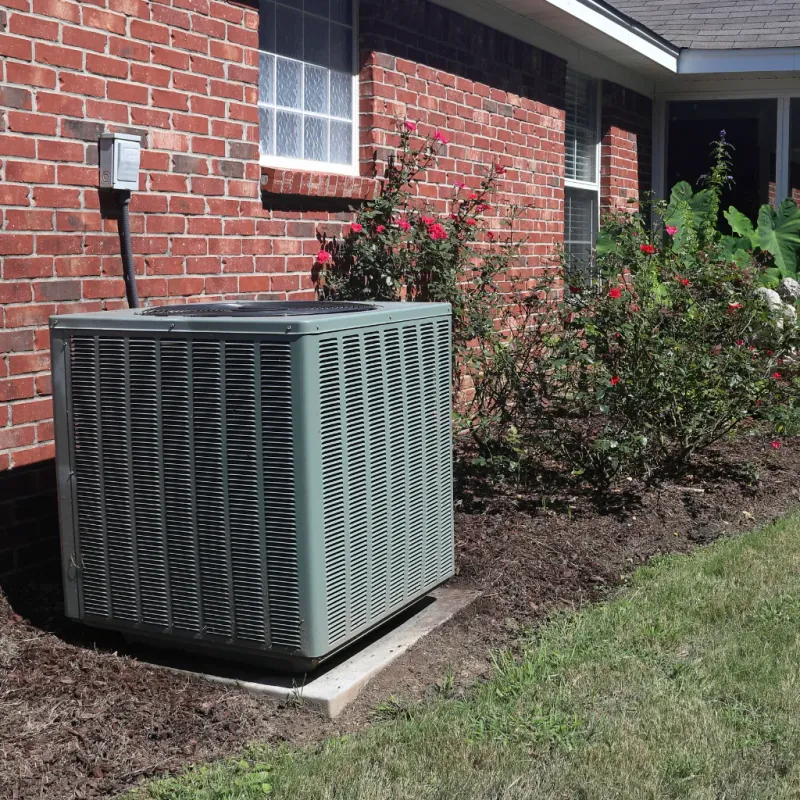
- ✓ Air conditioning: Condenser age and condition, coil and line set condition, disconnect and clearances, condensate handling, and temperature split when conditions allow safe operation.
- ✓ Venting and combustion air: Flue material and slope, draft, clearances to combustibles, and whether the appliance is getting the combustion air it needs. This is where the safety findings usually come from.
- ✓ Ductwork and distribution: Accessible supply and return runs, visible disconnections, crushed or unsupported flex, missing insulation in unconditioned space, and whether the finished basement or addition ever got a proper return.
- ✓ Controls and condensate: Thermostat operation, humidifier condition, condensate pump and drain lines, and the shutoffs that are supposed to be there and often aren't.
Weather sets limits, and we tell you when we hit one
Air conditioning can't be safely test-run when outdoor temperatures are below roughly 60 degrees. Running a compressor in cold weather can damage it, so a February inspection in Summit County means the AC gets a visual and documentary evaluation rather than a performance test. Any inspector who claims to have fully tested a condenser in a Northeast Ohio winter is telling you something that isn't true.
The reverse applies in July. A furnace can be cycled in summer, but it tells you less than the same test in cold weather. We're direct in the report about what was tested, what was evaluated visually, and what the season prevented. You'd rather have that stated plainly than assumed.
We don't sell furnaces
An HVAC contractor who inspects your system is also the company that would sell you the replacement. That isn't automatically a problem, but it's a conflict worth naming. We don't do repairs, replacements, or service contracts, so there's no version of this where we benefit from telling you the system is worse than it is.
When a unit is fine, we say it's fine. When it's twenty-two years old and rusting at the base, we say that too, along with what it would reasonably cost you to plan for. If a finding needs a licensed HVAC tech to open the unit and go further, we tell you that instead of guessing.
Frequently Asked Questions
Isn't HVAC already covered in a home inspection?
Can you tell me exactly how many years the furnace has left?
Can you check the air conditioner in winter?
Do you inspect the ductwork?
What if you find a cracked heat exchanger?
Related Services
Service Areas
- Summit County (Akron, Copley, Fairlawn, Bath)
- Medina County (Medina, Wadsworth, Brunswick)
- Portage County (Kent, Ravenna, Streetsboro)
- Stark County (Canton, North Canton, Green)
- Cuyahoga, Lorain, and Geauga Counties
Business Hours